 Probably Computers
Probably Weather
Full-stack IoT weather monitoring for solar installations
Probably Weather is a full-stack IoT weather monitoring platform purpose-built for solar installation sites. Raspberry Pi field stations equipped with industrial-grade Seven Sensor compact weather stations collect 30-second readings of solar irradiance, temperature, humidity, air pressure, rainfall, and wind data via Modbus RTU over RS-485.
The data flows through an event-driven pipeline: MQTT over TLS to an EMQX broker, bridged into Apache Kafka on Kubernetes, consumed and written to InfluxDB for time-series storage, and served through a Django REST API to a Next.js frontend with real-time dashboards, historical charts, and map views.
The platform includes zero-touch device provisioning via custom boot stock images, fleet management through Ansible-as-a-Service, and a self-hosted status page with Telegram alerting. It spans 10 repositories and 17 ArgoCD-managed applications on GKE.
Screenshots
A closer look at the application
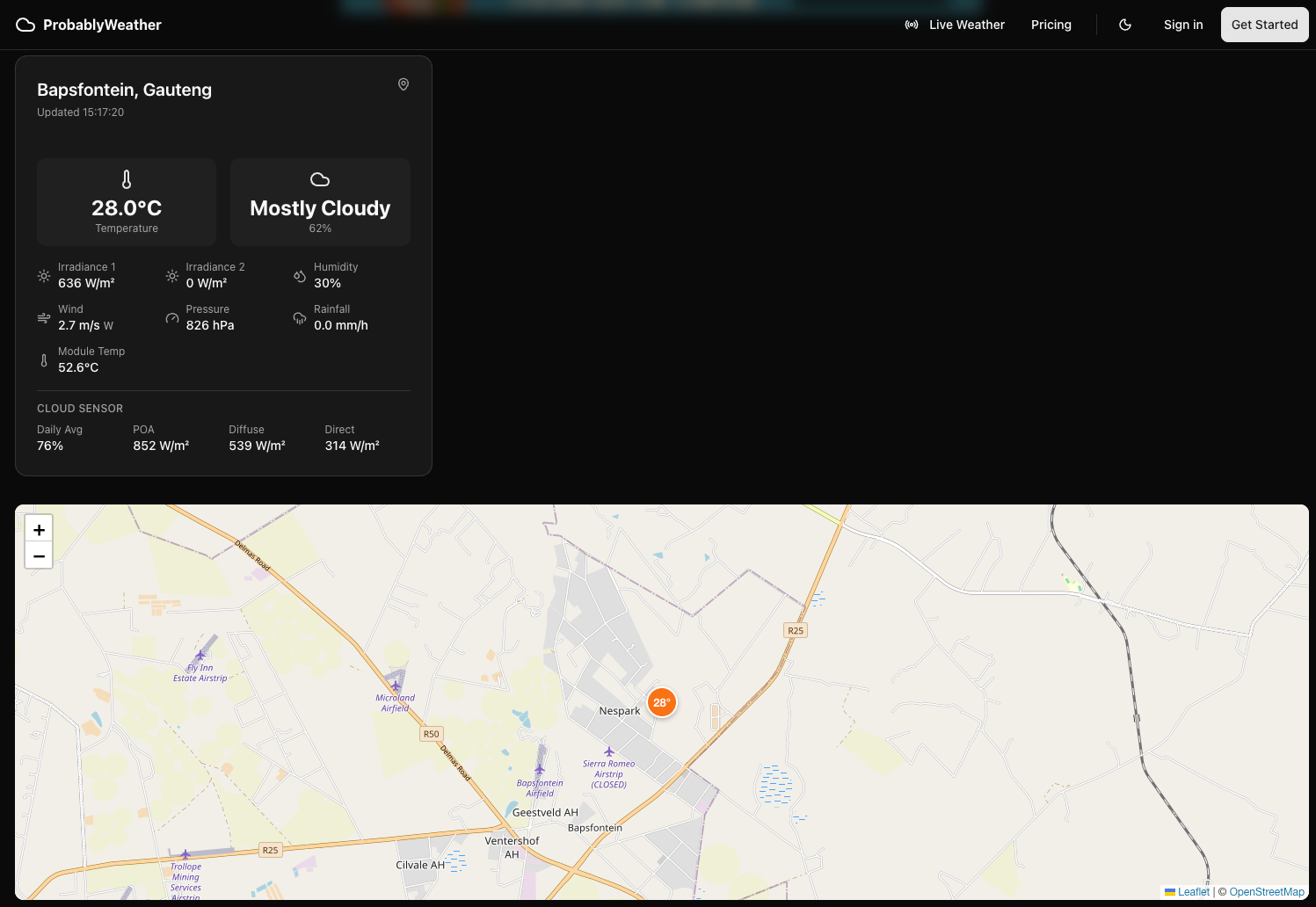
Public live weather view with current conditions, sensor readings, and map
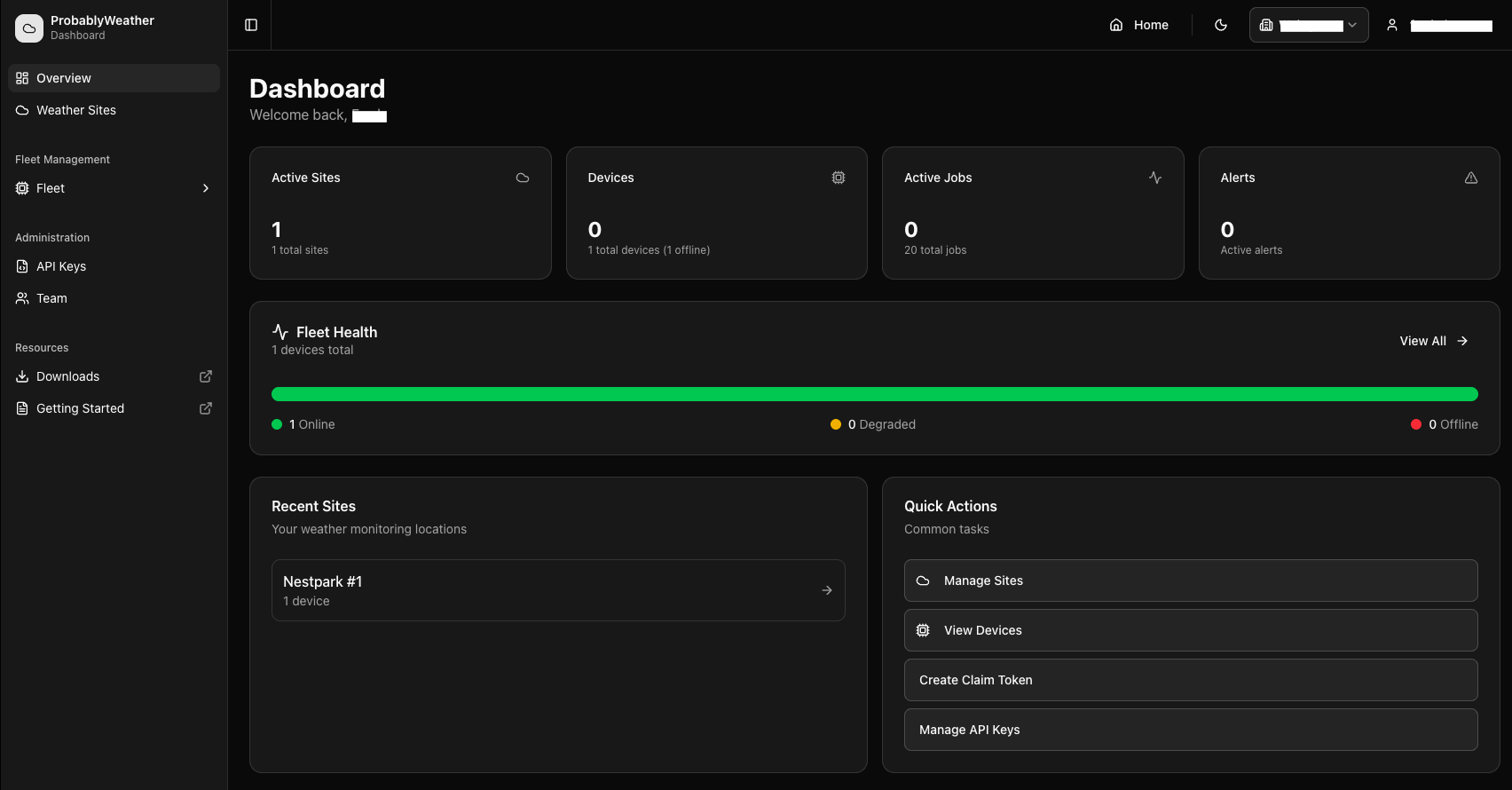
B2B dashboard with active sites, fleet health, devices, and quick actions
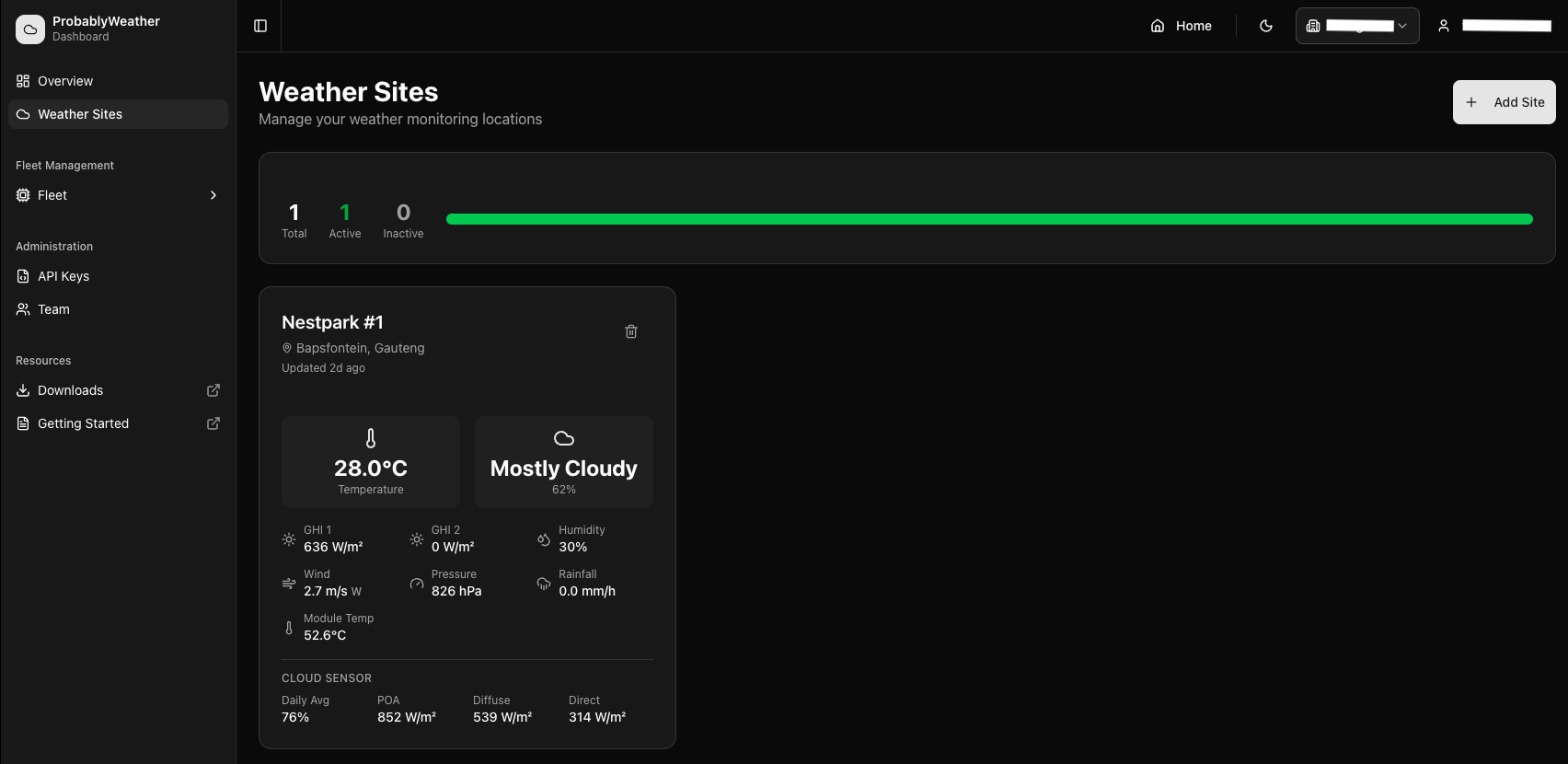
Weather sites list with live temperature, conditions, and sensor data
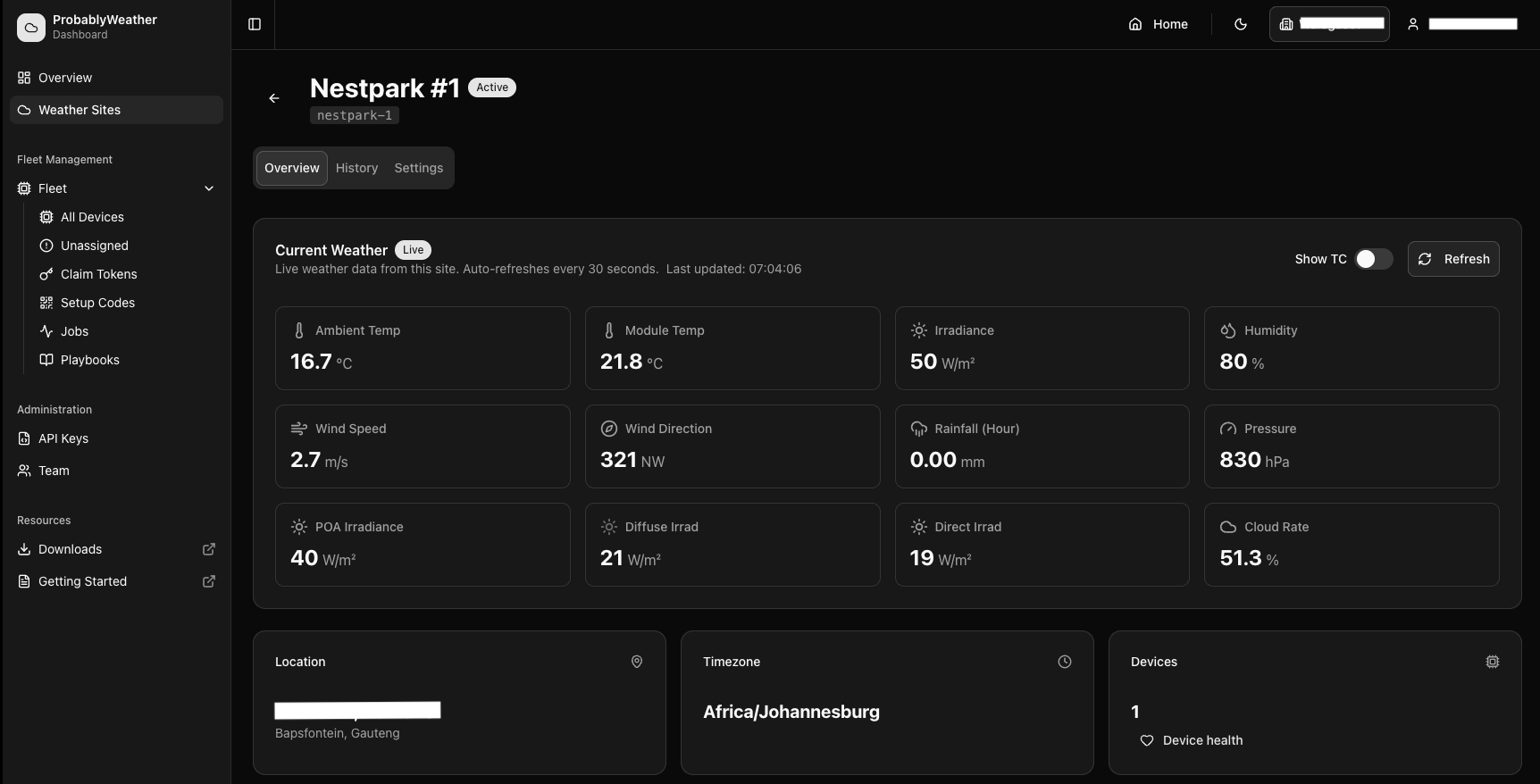
Site drilldown with 12 live sensor metrics updated every 30 seconds
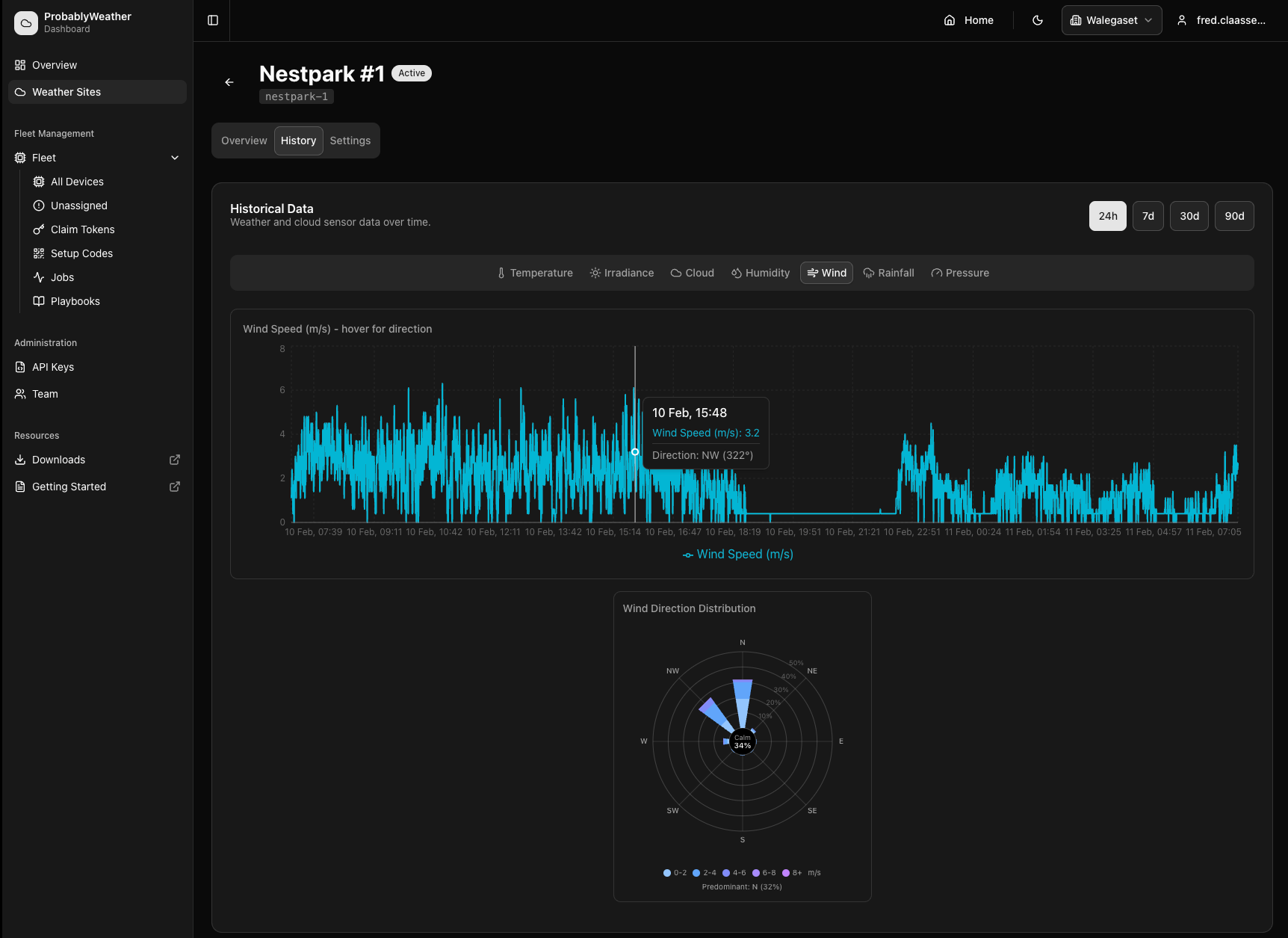
Historical weather data with wind speed chart and wind direction rose diagram
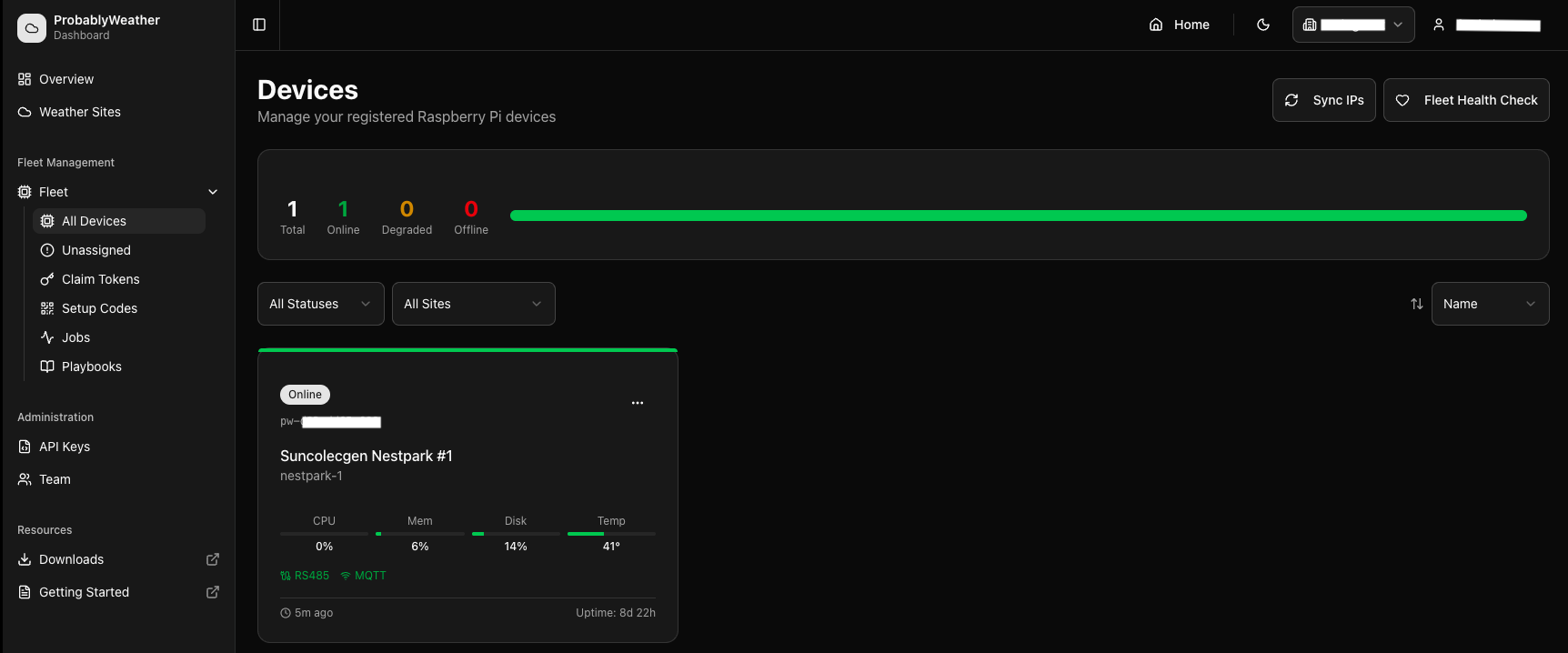
Fleet device management with CPU, memory, disk, temperature, and connectivity status
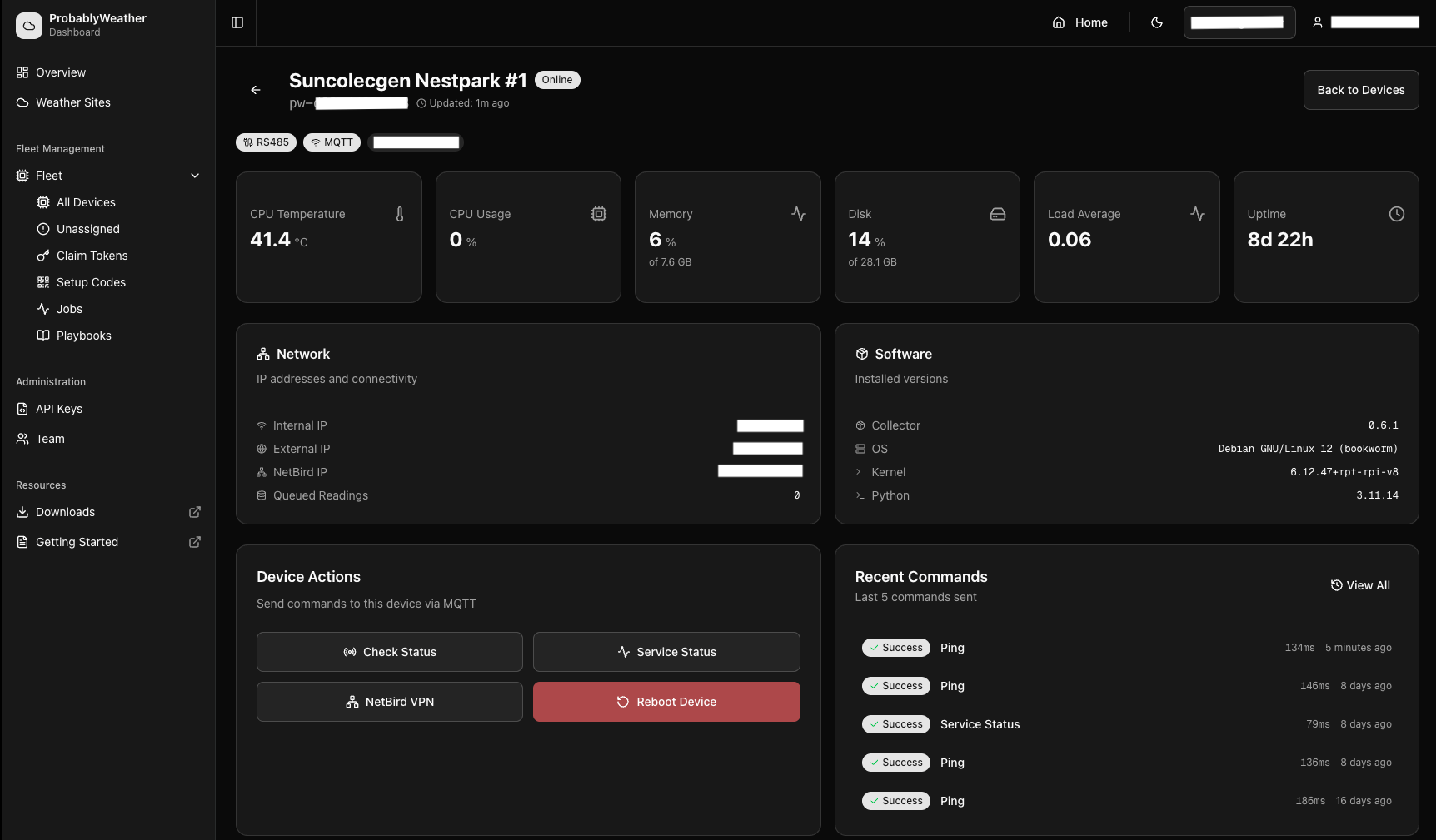
Device drilldown with network info, software versions, MQTT commands, and command history
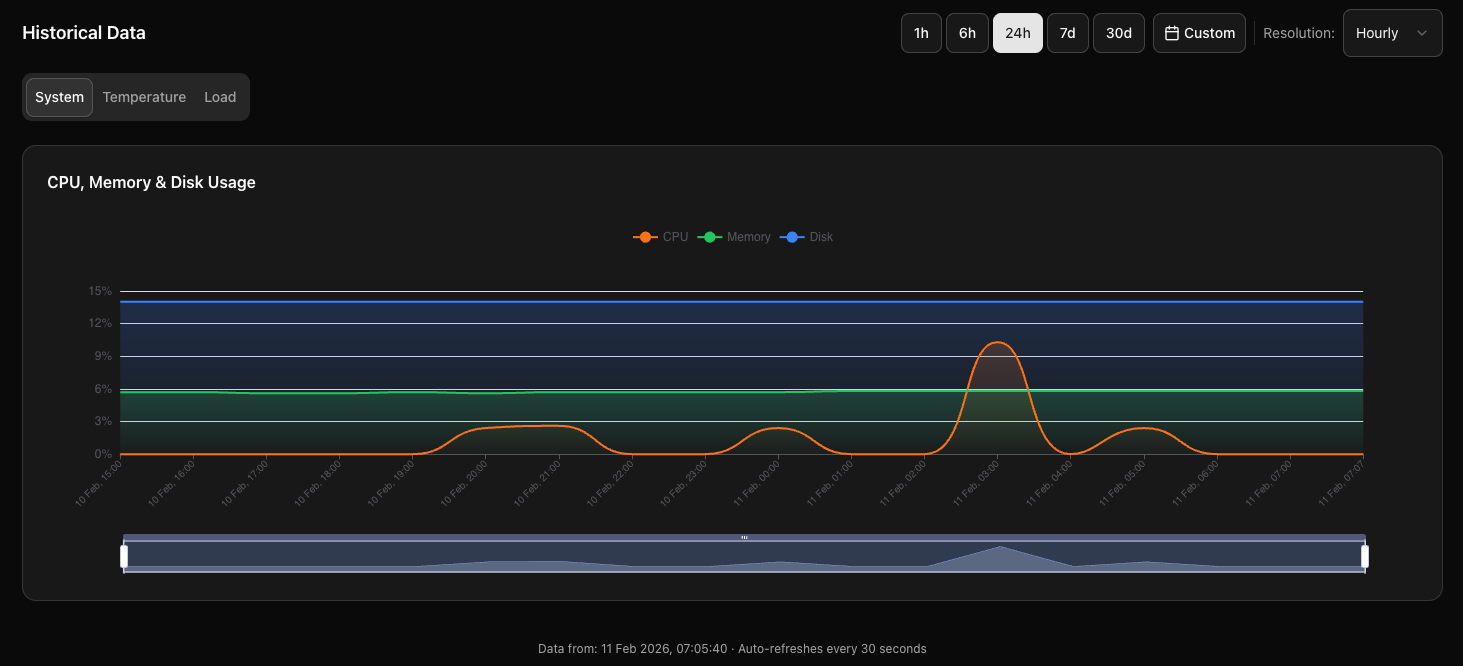
Device resource usage charts with CPU, memory, and disk over time
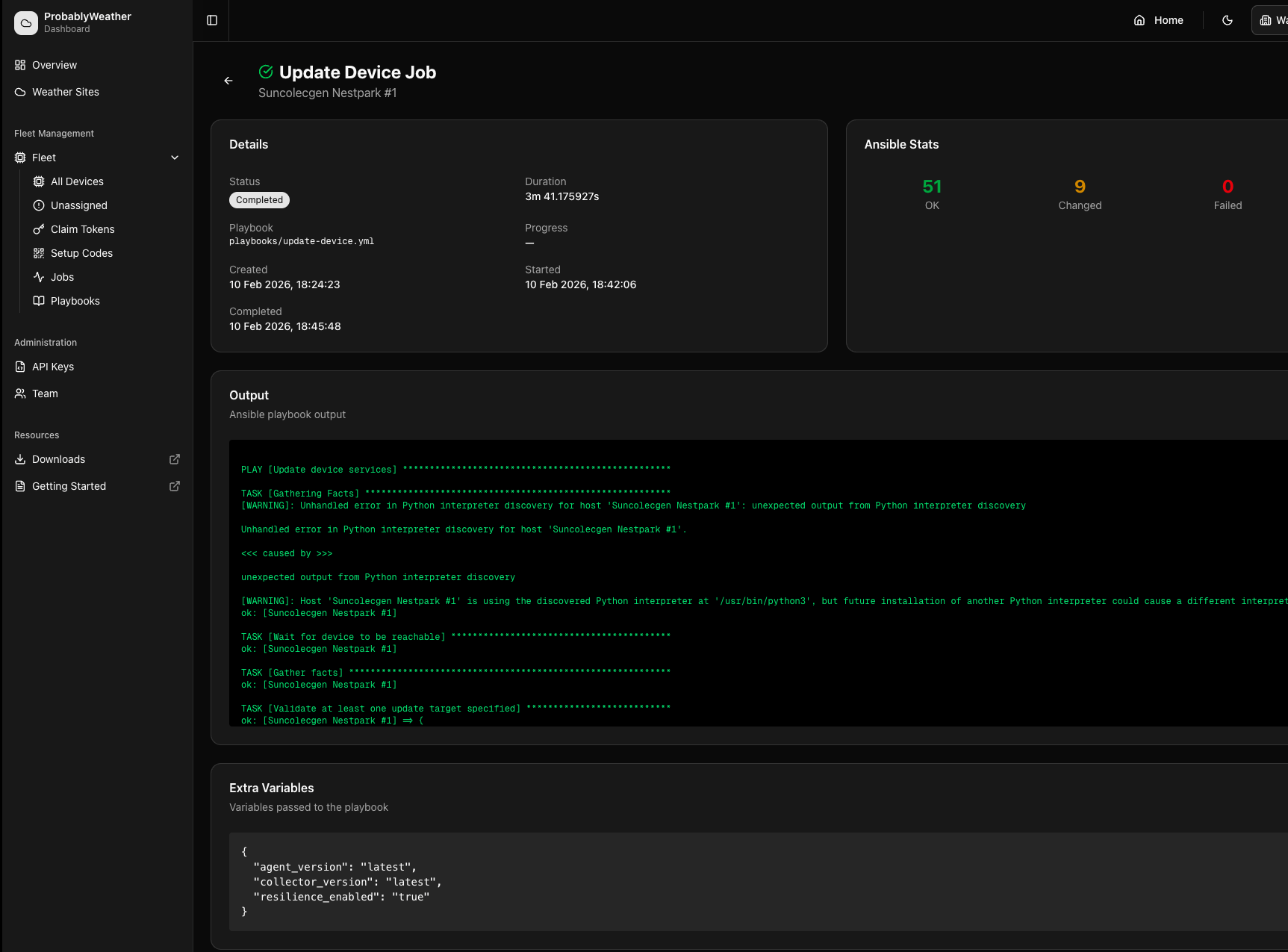
Ansible playbook job with execution output and stats
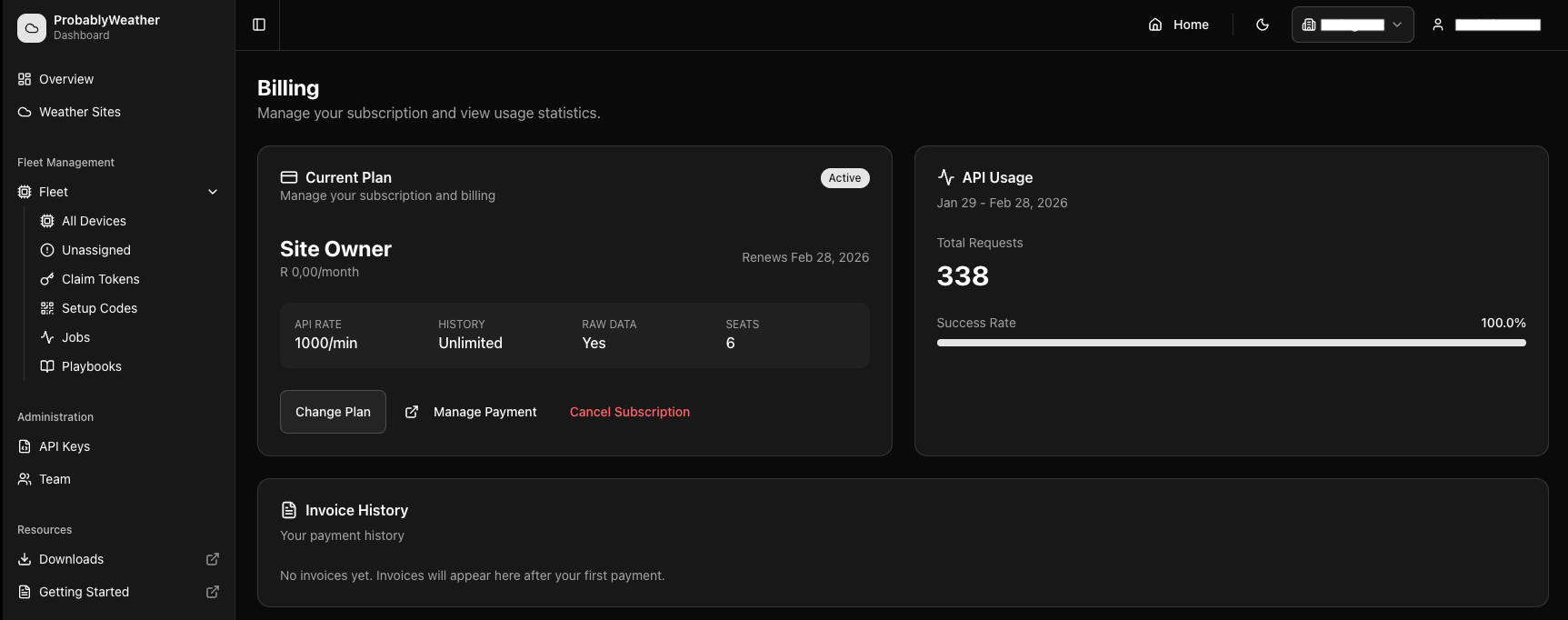
B2B billing with subscription plan, API usage stats, and invoice history
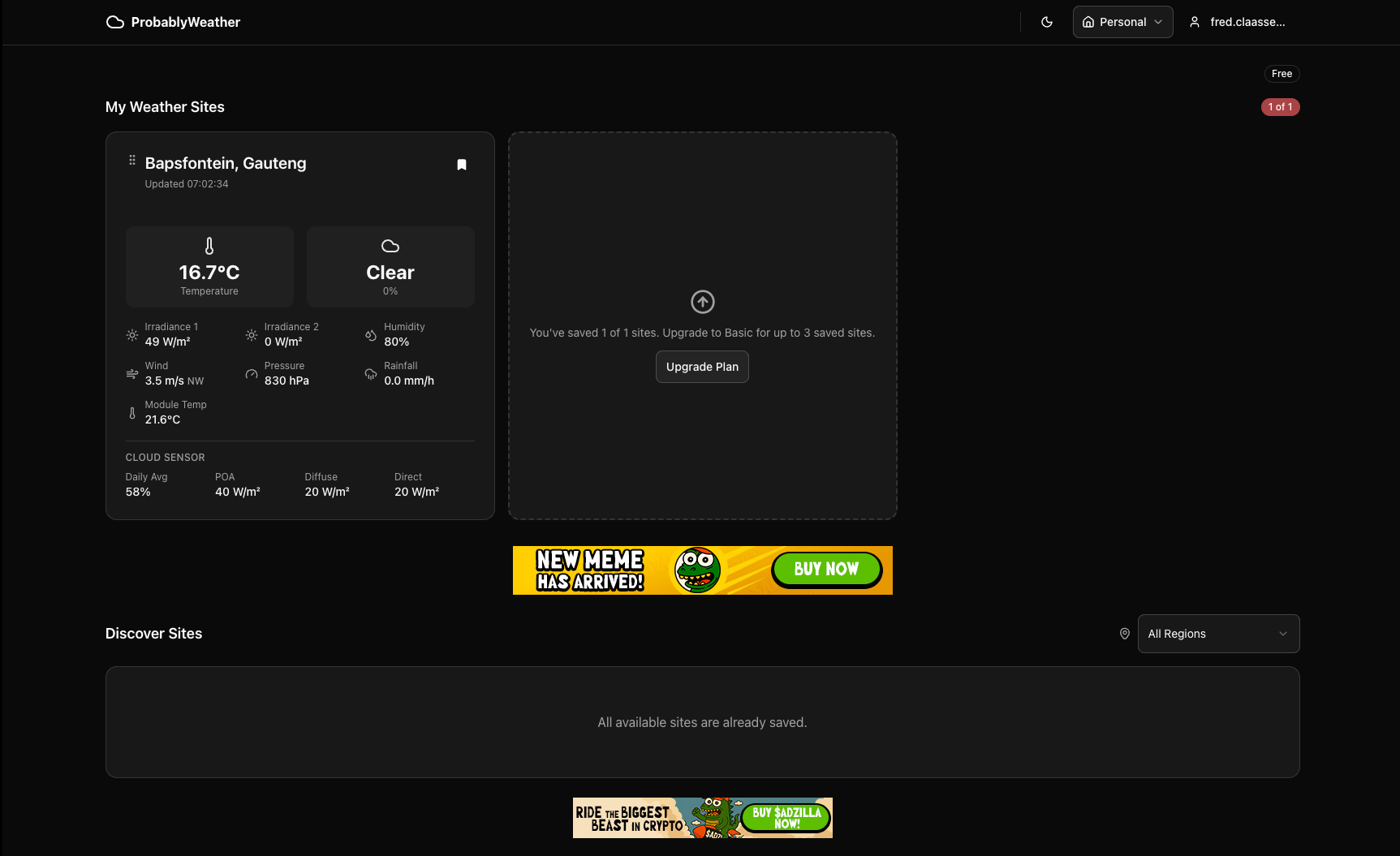
Consumer dashboard with saved weather sites and current conditions
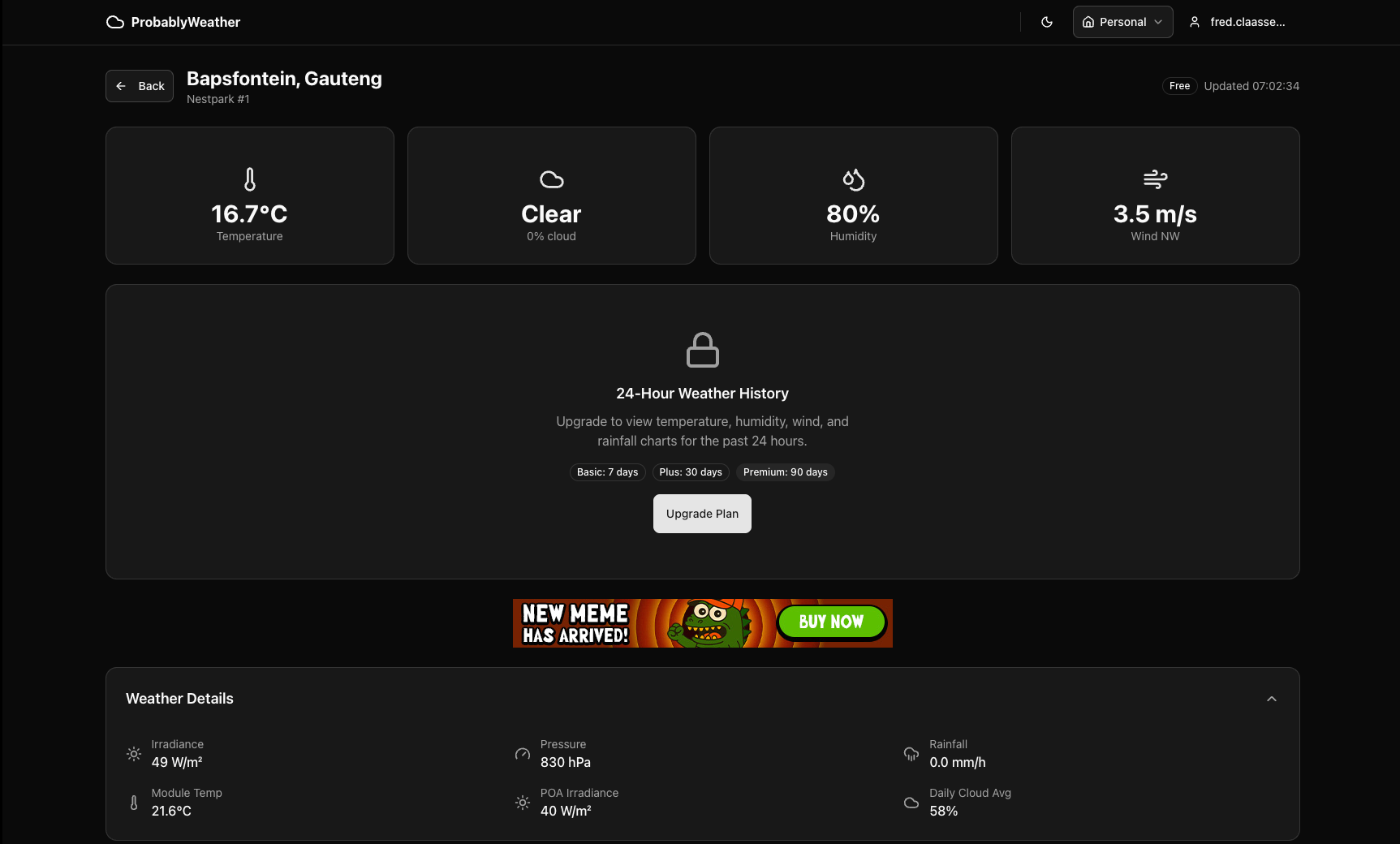
Consumer site detail with weather conditions and tiered feature access
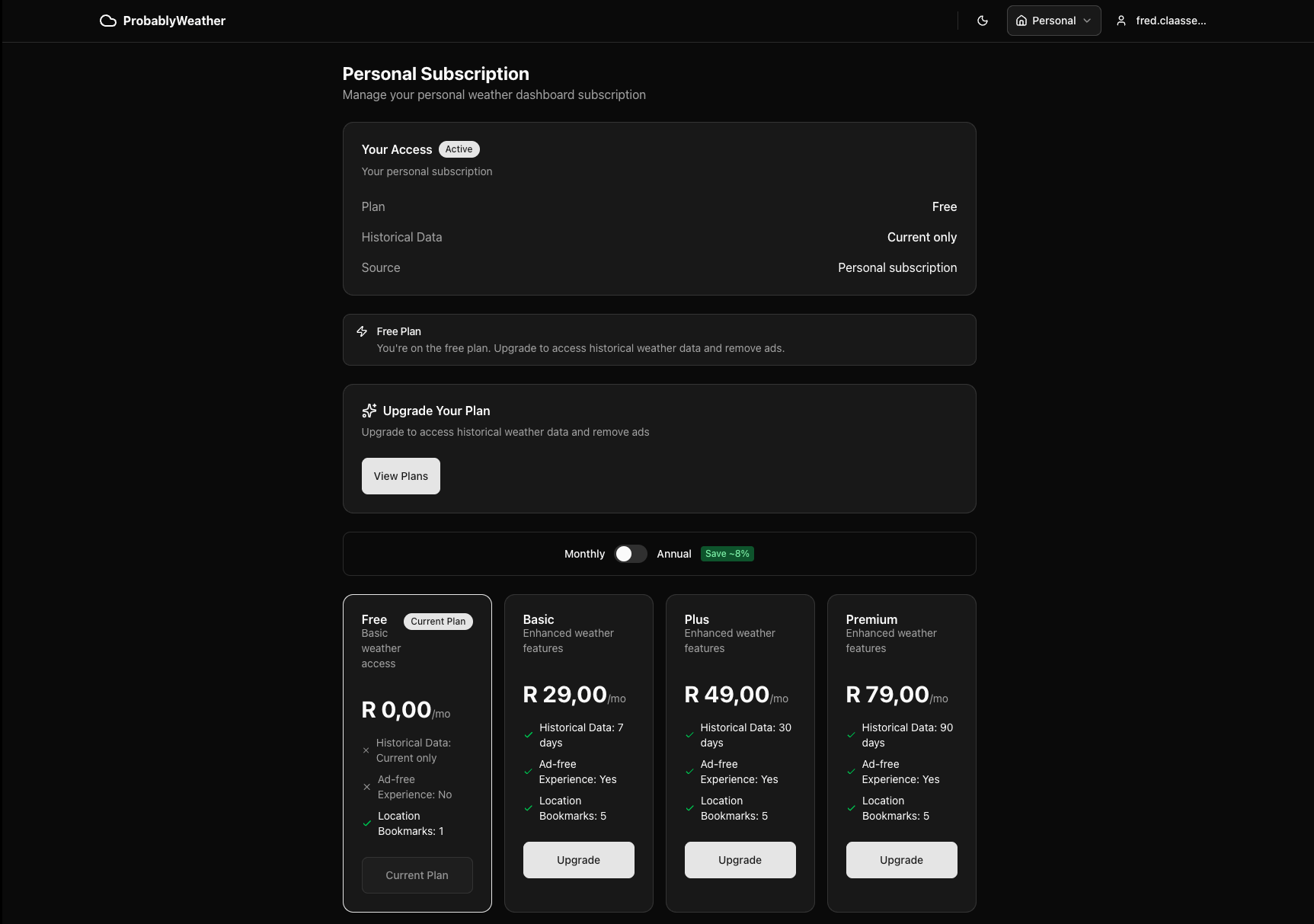
Consumer subscription plans with Free, Basic, Plus, and Premium tiers
The Challenge
Solar companies need continuous weather monitoring across remote sites. Off-the-shelf solutions lack industrial sensor support, fleet management, and tie operators to vendor-locked platforms.
System Architecture
How the system is structured from edge to interface
Zero-Touch Provisioning
Custom boot images with cloud-init and automatic Ansible provisioning for plug-and-play field station deployment.
17 ArgoCD Applications
App-of-Apps pattern on GKE with automated sync, health checks, and rollback across 10 repositories.
Fleet Management via VPN
Ansible-as-a-Service with Celery workers for remote device management over NetBird VPN mesh network.
Engineering Decisions
Why we chose specific technologies and patterns
Tech Stack
Technologies and tools powering this project
Interested in a project like this?
We build custom platforms tailored to your business needs. Let us know how we can help.